IOLEBA

 IOLEBA Arcade – Crossword

Apologies, our engineering team is still working to get a truly competitive crossword puzzle. 

“A crossword built by humans, powered by AI, played by the world.

2026 

January

February

March

  IOLEBA Crossword Directory


    Puzzle 1


    Puzzle 2


    Puzzle 3


    Puzzle 4


    Puzzle 5


    Puzzle 6


    Puzzle 7 


    Puzzle  8


    Puzzle  9


    Puzzle  10


    Puzzle  11


    Puzzle  12


    Puzzle  13


    Puzzle  14

Answer Key (Answers to weekly puzzles are posted one week after the puzzle is published)

IOLEBA Games • Game 103

The Hidden Complexity of a Crossword

Why January 1 marks the birth of a new generation of puzzles
Feature Puzzles + Engineering ~4 min read
Launch Note
We’re publishing the story first (this page) and releasing the new interactive crossword experience on January 1. Bookmark this page and check back — we’ll update it here.

M ost people think of a crossword as a pleasant diversion — a grid, a few clues, a quiet moment with coffee.

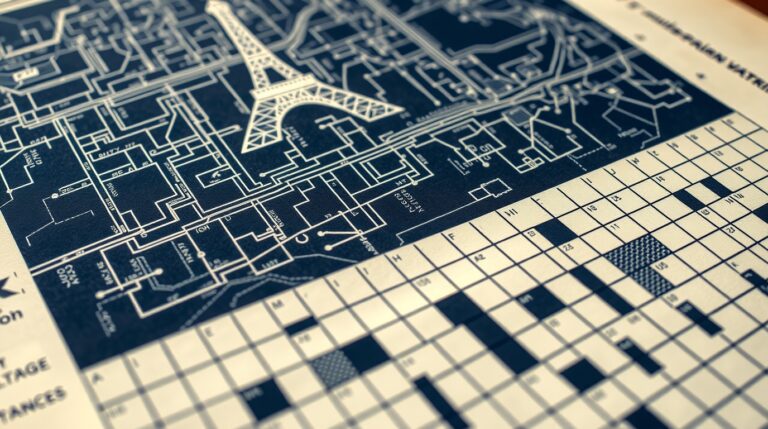
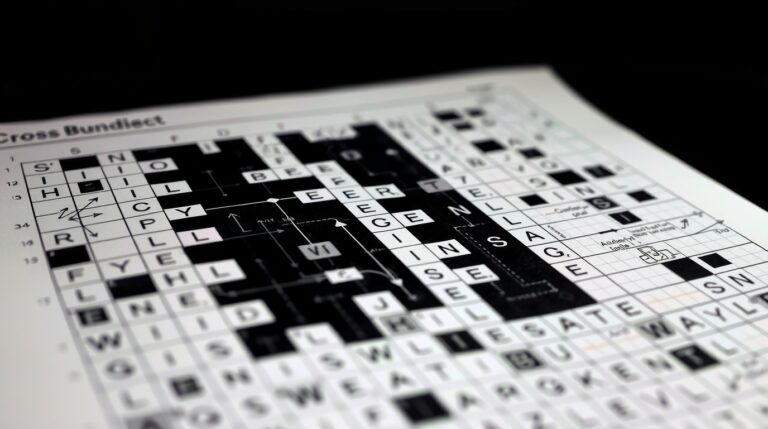
In reality, a true crossword is one of the most demanding intellectual constructions ever created. Every letter must work twice: once Across and once Down. One weak intersection can collapse an entire puzzle. Behind every clean grid lies a dense web of logic, language, symmetry, and constraint.

This is not trivia. This is engineering.
A Brief History of a Serious Craft

The modern crossword traces back to Arthur Wynne, who published the first known crossword in 1913. What began as a simple word game quickly evolved into a cultural institution.

By the mid-20th century, crosswords had become a daily ritual — especially through the great newspaper traditions — where puzzle construction turned into a disciplined craft practiced by a small group of elite constructors. These weren’t casual wordsmiths. They were architects of language, balancing fairness, difficulty, symmetry, and cultural relevance — all without computers.

A crossword is a system of constraints long before it becomes a game.

Why Real Crosswords Are So Hard

A legitimate crossword is not built word by word. It is built constraint by constraint.

Before a single clue is written, the constructor must satisfy a web of invisible rules: symmetry, balance, fairness, vocabulary range, and cross-checking integrity. Every letter placed must serve two directions simultaneously. There are no isolated decisions.

One weak intersection can force a complete rebuild.

This is why many crossword grids are abandoned halfway through. A choice that looks harmless in one corner can make another section mathematically impossible. What appears playful on the surface is, underneath, a dense system of dependencies.

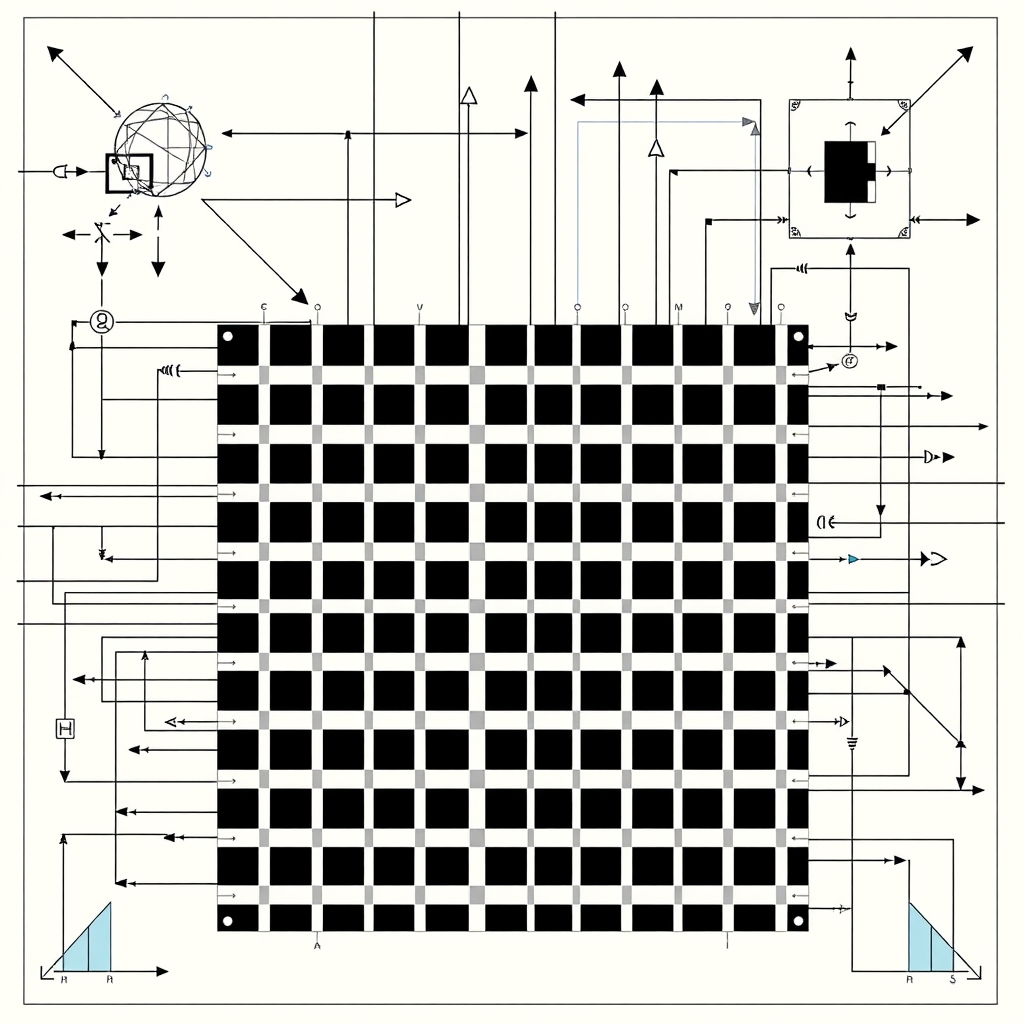
In this sense, a crossword is closer to a piece of engineering than a word game. The final grid hides the struggle. All the complexity disappears the moment the puzzle looks “clean.”

And that is the point.

When Engineering Entered the Puzzle World

In recent years, crossword construction quietly crossed into computational design.

One of the most respected frameworks in this space is Exolve, an open-source crossword engine developed by Viresh Ratnakar, affiliated with MIT. Exolve does not simply display puzzles. It enforces the structural rules of legitimate crossword construction — symmetry, connectivity, clue discipline, and consistency — while enabling modern, interactive solving.

This matters because real crosswords are not judged by how they look, but by how rigorously they are built.

Exolve represents a shift from intuition alone to verifiable structure. It brings engineering discipline to a craft that has always depended on invisible rules. The solver never sees this layer — but they feel it.

This is not a toy system.
It is precision software built for serious puzzles.

Why IOLEBA Is Doing This

At IOLEBA, we are focused on one core question:
How do humans learn to work effectively with intelligent systems?

Crosswords are an unexpectedly powerful lens for exploring that question.

A well-constructed puzzle is not about trivia or vocabulary. It is about systems thinking — understanding constraints, anticipating interactions, and making deliberate choices within a fixed structure. Every square is dependent on another. Every decision propagates across the grid.

This mirrors modern work.

Whether in engineering, business, science, or creative fields, success increasingly depends on navigating complex systems where human judgment and computational assistance coexist. The skill is not outsourcing thinking to machines — it is learning how to collaborate with them.  

That is why we chose to slow down and build this correctly.

Rather than rushing out a puzzle, we chose to document the process, respect the engineering, and highlight the partnership between human creativity and structured tools. The result is not just a crossword — it is a demonstration of how careful design, discipline, and collaboration produce better outcomes.

This is the same philosophy behind everything IOLEBA builds:

  • Education that values understanding over shortcuts

  • Tools that assist rather than replace human decision-making

  • Systems designed for longevity, not novelty

The puzzle you will see is only the surface.
The thinking behind it is the point.

IOLEBA GAMES · GAME 103

See What Humans + AI Built

Return January 1 to play the first puzzle — and join us for 52 new challenges throughout 2026. Bookmark this page. Share it with friends. The grid is just the beginning.