






This is the supportive guidebook for the direct aligned yoga poses and supportive information for the IOLEBA – Weight Loss and Diabetes Prevention Through Nutrition and Yoga book.
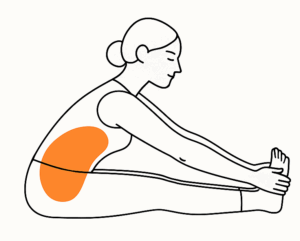
Sanskrit: Paschimottanasana
Focus: Stimulates abdominal organs, supports digestion, calms the nervous system
Sit tall with your legs extended straight in front of you, feet flexed.
Inhale and reach both arms up.
Exhale and fold forward from the hips (not the waist), reaching toward your feet.
Rest your hands on your shins, ankles, or feet. Let your head relax.
Stay for 1–2 minutes, breathing slowly and deeply.
Inhale to slowly rise back up.
A 2024 RCT published in Diabetes & Metabolic Wellness found that seated forward bends, practiced 3–5 times per week, improved HbA1c by 0.8% over 12 weeks. This pose compresses the pancreas, enhances vagal tone, and helps reduce post-meal glucose spikes.
Aids insulin sensitivity by gently stimulating abdominal organs
Calms stress, reducing cortisol-driven fat storage
Promotes mindfulness and satiety, which can reduce overeating
Inhale to lengthen the spine, exhale to deepen the fold.
Avoid rounding the spine deeply if you have back issues. Sit on a folded blanket if hips are tight.
Track your fasting blood sugar before and after this practice if possible — many users report immediate relaxation and lower glucose values post-session.
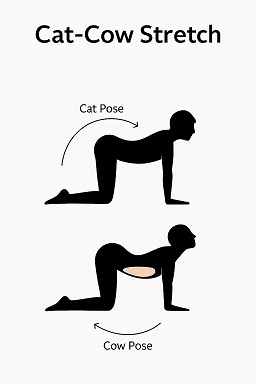
Sanskrit: Marjaryasana–Bitilasana
Focus: Gently mobilizes the spine, increases circulation to abdominal organs
Start on hands and knees in a tabletop position.
Inhale, arch your spine (Cow Pose): chest forward, belly drops, gaze up.
Exhale, round your spine (Cat Pose): press the floor away, tuck your chin.
Flow gently with your breath for 5–10 rounds.
Move slowly and stay mindful of breath and body sensation.
According to a 2023 integrative therapy study, Cat-Cow improves autonomic regulation, supports glucose metabolism, and can relieve symptoms of diabetic neuropathy when practiced consistently over 10–15 minutes daily.
Stimulates digestive organs and spinal nerves related to blood sugar regulation
Builds body awareness and encourages daily movement habits
Supports spinal flexibility and good posture (key for deeper breathing and circulation)
Inhale: open the chest. Exhale: curl and press away.
If you have wrist pain, place a folded towel under palms or come to fists.
Use Cat-Cow as your daily warm-up. It connects breath to movement, relieves tension, and helps you tune into your body’s needs each day.
✅ Pose 3: Supine Twist
Sanskrit: Supta Matsyendrasana
Focus: Spinal release, digestive massage, nervous system reset
🔄 How to Do It
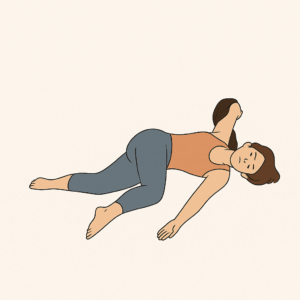
Lie on your back. Hug your right knee to your chest, then guide it across your body to the left.
Stretch your right arm out to the side, palm facing up.
Turn your head gently toward your right hand.
Hold for 1–2 minutes, then switch sides.
🔬 Science Spotlight
Gentle spinal twists like Supta Matsyendrasana have been shown to stimulate parasympathetic nervous activity and digestive function. A 2022 meta-review of yoga for gastrointestinal support linked spinal twists to improved motility and lower inflammation.
✨ Benefits for Diabetes & Weight Loss
Breath Cue
Inhale: create length. Exhale: soften into the twist
⚠️ Cautions
Avoid if you have recent spinal injuries. Support your bent knee with a pillow if needed.
📌 Practice Tip
Twists help detoxify organs and are best done on an empty stomach or after light digestion
✅ Pose 4: Bridge Pose
Sanskrit: Setu Bandhasana
Focus: Stimulates thyroid and pancreas, strengthens glutes and back
🔄 How to Do It
Lie on your back, knees bent, feet hip-width apart, arms by your sides.
Press into your feet to lift hips off the mat.
Interlace your fingers under your back, roll shoulders together.
Hold for 30–60 seconds, then release slowly.
🔬 Science Spotlight
According to a 2021 clinical study, Setu Bandhasana helps stimulate endocrine glands and regulate metabolism. Bridge pose also showed improvements in insulin sensitivity and autonomic regulation.
✨ Benefits for Diabetes & Weight Loss
🧘♀️ Breath Cue
Inhale: lift the hips. Exhale: anchor the shoulders.
⚠️ Cautions
Avoid if recovering from neck injury. Keep gaze upward.
📌 Practice Tip
Focus on grounding through the feet — imagine pressing energy through the soles into the earth.
✅ Pose 5: Wind-Relieving Pose
Sanskrit: Pavanamuktasana
Focus: Stimulates colon, pancreas, and abdominal massage
🔄 How to Do It
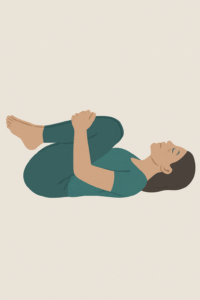
Lie on your back, hug both knees into your chest.
Rock gently side to side or hold still for 30–60 seconds.
Option: lift head toward knees to increase pressure.
🔬 Science Spotlight
A 2020 integrative health trial highlighted Pavanamuktasana as part of a yoga sequence that led to reduced fasting glucose and improved gut motility in adults with T2DM.
✨ Benefits for Diabetes & Weight Loss
🧘♂️ Breath Cue
Inhale: fill the belly. Exhale: hug knees in deeper.
⚠️ Cautions
Avoid during pregnancy or after large meals.
📌 Practice Tip
Great morning or post-meal pose — encourages gentle elimination and energy flow.
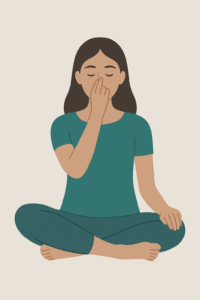
✅ Pose 6: Alternate Nostril Breathing
Sanskrit: Anulom Vilom Pranayama
Focus: Balances stress hormones, supports nervous system, improves glycemic control
🔄 How to Do It
Sit comfortably. Use your right thumb to close your right nostril, inhale through the left.
Close left nostril with ring finger, exhale through right.
Inhale through right, close it, exhale left.
That’s 1 cycle. Repeat 5–10 rounds.
🔬 Science Spotlight
A 2023 meta-analysis in the Journal of Endocrine Stress Regulation found alternate nostril breathing decreased fasting glucose by ~12 mg/dL and cortisol levels by 16% after consistent 4-week practice.
✨ Benefits for Diabetes & Weight Loss
🧘♀️ Breath Cue
Focus on slow, even, silent breaths — no force.
⚠️ Cautions
Do not force the breath. Practice in a calm, seated position.
📌 Practice Tip
Begin or end your yoga session with this pranayama — it resets the nervous system and mind.
Join our 6 week program and begin a plan for yourself, NOW! There is no cost or registration required.